
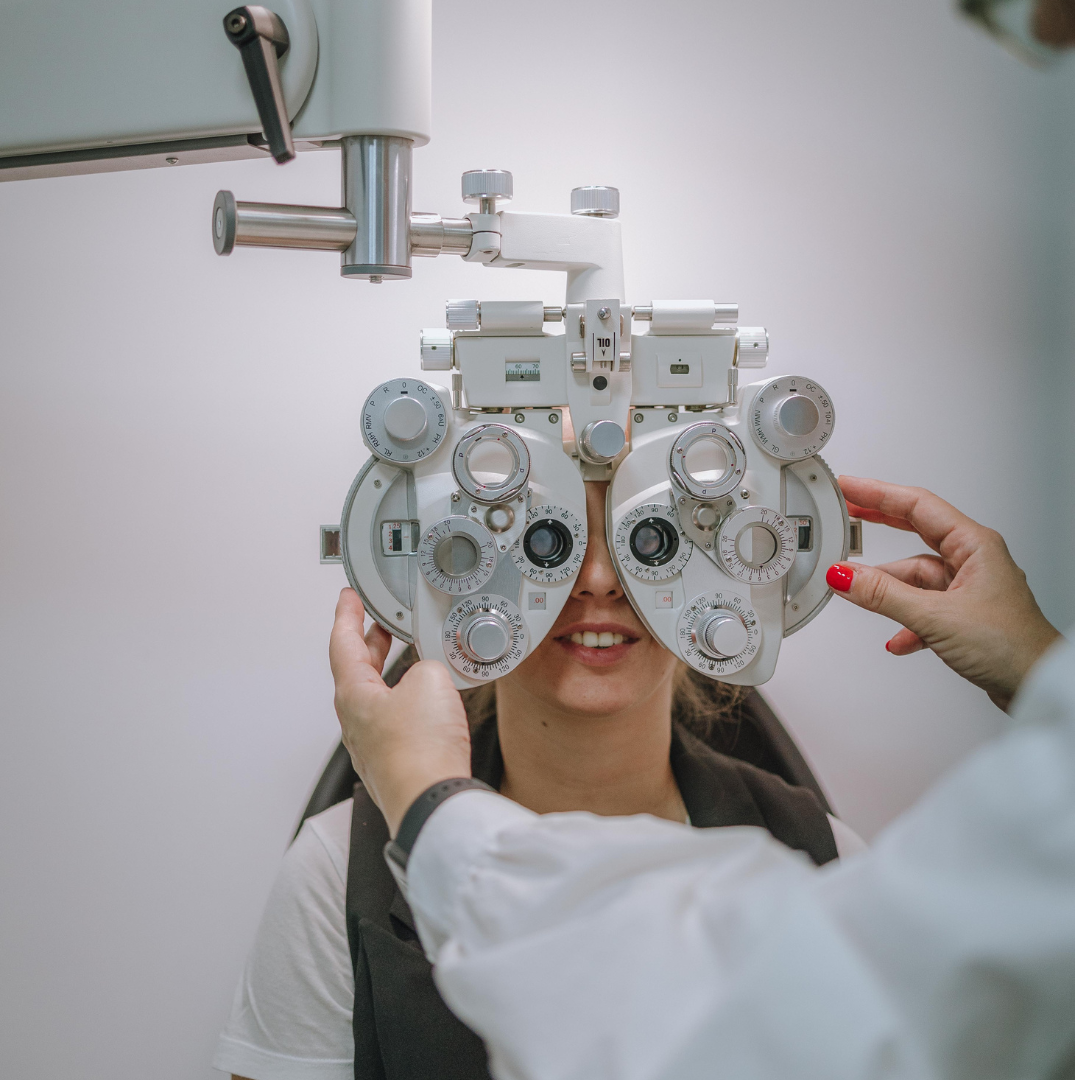
Do your eyes itch, do you get tired from staring at something, do you see blurry from afar?
Many times you wonder why you have this eye problem, or why this happens to you.
Well, there are genetic visual problems. We are talking about the different types of ametropia that exist.
There are 3 different types of ametropia:
It causes distance vision problems if not compensated with glasses, contact lenses or refractive surgery, but these visual problems do not equally diminish distant vision.
What is myopia?
Myopia is the main refractive error that significantly affects any long distance, but it is also the most grateful of all for providing a simple optical solution such as glasses or contact lenses.
Here, without a doubt, the best solution is contact lenses, and the sooner the better, since you will see a more real image and gain in visual field, expanding the limits of better vision and freedom of eye movements that are delimited by frames. Especially if they are not progressive glasses.
Myopia is corrected with divergent lenses.
When does myopia occur?
Myopia occurs when distant images are focused in front of the retina. (Producing blurry distant vision)
What is hyperopia?
Hyperopia is the opposite defect to myopia. This is mainly due to two causes: the eye is shorter than normal or because the eye's dioptric power is insufficient.
How to compensate for this refractive error?
In cases of moderate or mild hyperopia, there will be no blurred vision because the lens will increase its dioptric capacity, making light rays converge and focus on the retina without causing blurred vision.
This puts a strain on the lens, and this constant accommodative effort can lead to other problems such as: headaches, eye strain, and even strabismus.
In cases of high hyperopia, the lens cannot compensate for the entire defect, and then blurred vision will occur both at a distance and up close.
Hyperopia is corrected with converging lenses, either in glasses or contact lenses.
When does hyperopia occur?
Hyperopia occurs when objects are focused behind the retina and not on it. (Affecting near vision)
What is astigmatism?
Depending on the patient's age, visual acuity, the type of astigmatism they suffer from, or their prescription, they may or may not perceive symptoms, and these can be diverse.
In general, the main symptom is the blurred or distorted perception of both distant and near objects. This blurred vision usually becomes more pronounced at night or in low light conditions.
It is also common to have difficulty perceiving small details at all distances.
In cases where it is associated with hyperopia, the patient often suffers from:
- Eye strain
- Redness
- Itchy and burning eyes
- Gritty sensation
- Eye pain
- Problems with changing vision from far to near and vice versa
- Dizziness or headaches due to the extra effort the eye makes to focus images. Headaches usually appear, especially, in the frontal area.
If you experience any or several of these symptoms, it is advisable to visit your optician for a vision assessment to determine if you actually have astigmatism.
Make an appointment at your trusted optician in Murcia, Óptica Murcia LUPER and resolve any visual problems you may have.
We look forward to seeing you at LUPER to advise you on everything you need, give you a no-obligation quote, and check your eyesight for free with our exclusive Personalized Eye Exam.